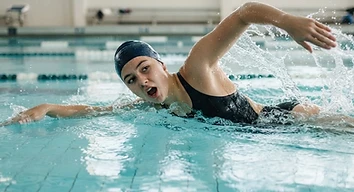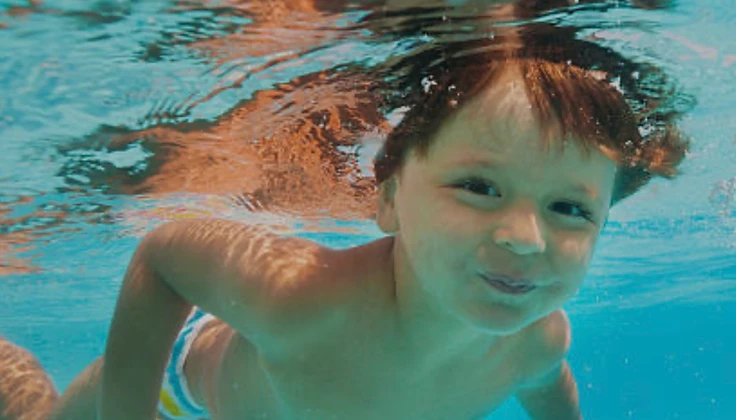
Two swimmers with identical strokes can finish a length a body length apart, and the difference is almost always the wall. Turns and streamlines are the most valuable and least practised skills in age-group swimming.
The wall is free speed
A tight push-off carries more speed than any arm stroke. A loose one wastes it. Every turn is a chance to come out ahead of where you went in.
What a good turn includes
- A fast approach. Swimmers who coast into the wall lose the speed they need to push off with.
- A compact tuck. Knees to chest, chin tucked, rotating quickly.
- Feet on the wall, not the toes. Whole foot contact, toes pointing where the swimmer is going.
- A tight streamline. Arms locked behind the ears, head between the arms, body straight and narrow.
- A few strong dolphin kicks before surfacing, then the first stroke without lifting the head.
Open turn versus flip turn
Younger and newer swimmers usually start with an open turn, which is simpler and legal in every stroke. The flip turn is faster in freestyle and backstroke, and we introduce it once a swimmer is comfortable being upside down and can hold a streamline.
Practising without a coach
Turn work does not need a full practice. Ten minutes of approaching the wall and pushing off, done slowly and correctly, improves turns faster than swimming laps with sloppy ones. Quality of repetition beats volume every time.
The habit that matters most
Never push off without a streamline. A swimmer who streamlines every single turn, in every set, will be faster within a month without changing anything else.