Infant Swim Lessons in Reno
Infant lessons are not about learning a stroke. They are about the water feeling ordinary — being held in it, accepting it on the face, and learning that a breath follows a cue. Everything a swimmer does later is built on that foundation.
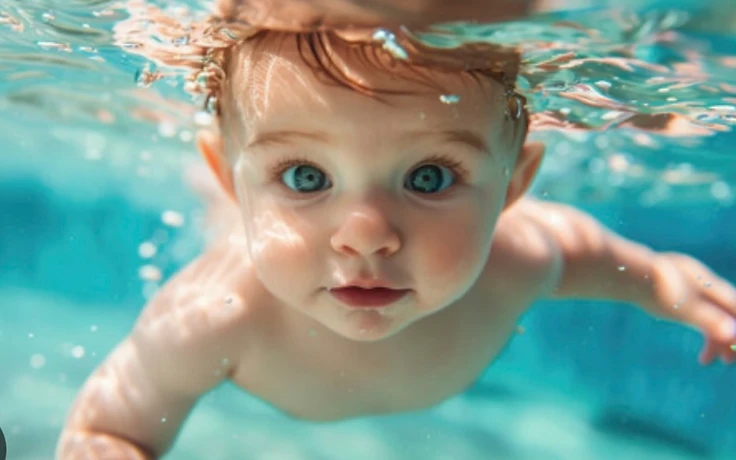
From ~3 months
Earliest start
Parent close by
You are involved
20 minutes
Short and calm
Warm water
Year-round indoor pool
When an infant can start lessons
Babies can begin as early as three months, and most families start somewhere between three and six months. There is no single correct month. What matters is that your baby is well, rested and comfortable being handled in the water that day.
Starting early has one clear advantage: a baby who meets the water before fear develops has less to unlearn. A baby who starts later is not behind — comfort can be built at any age.
If your baby has a medical condition, please check with your pediatrician before starting lessons. We are swim instructors, not medical professionals.
The small skills that matter most
At this age the skills are tiny, and they are the ones that make everything else possible.
- Being relaxed while supported in warm water
- Accepting water on the face, introduced gradually and only when calm
- Learning to hum with their mouth closed — the first step toward blowing bubbles
- Feeling buoyancy — that the water holds them up
- Being relaxed on their back, which comes naturally at this age
- Reaching for the wall or for a hand, an early habit that becomes self-rescue later
A realistic picture of infant lessons
Your baby may cry, especially in the first lesson or two. Crying usually means the situation is new, not that it is harmful. We slow down, keep your baby close to you, and let calm return before continuing.
Progress at this age is measured in comfort, not distance. A lesson where your baby settled, floated and came out content is a successful lesson — even if no new skill appeared.
Infant lessons never replace supervision. A baby or toddler who has had lessons is not “water safe” or “drown-proof”, and an adult must always be within arm’s reach in and around water.
What parents ask about this program
Real questions from families considering this service, answered plainly.
How early can a baby start swim lessons?
Three months is the earliest we start, and most families begin between three and six months. Starting early means your baby meets the water before fear develops, so there is less to unlearn. There is no penalty for starting later.
Do I get in the water with my infant?
Yes. At this age your baby is safest and most settled with a parent holding them, and you will learn the same holds and cues we use so practice continues at home in the bath.
Will lessons make my baby water safe?
No, and we will never claim that. Swim instruction is one layer of water safety. It does not make a child “water safe” or “drown-proof” at any age, and it never replaces active adult supervision within arm’s reach.
What should we bring to an infant lesson?
A swim diaper and well-fitting swimsuit for your baby, a towel, a change of clothes, and a snack for afterwards. For yourself, a swimsuit you can get in the water in, plus your own towel.
Other lesson programs
Not quite the right fit? These pages explain the other paths families choose.
Give your baby a calm start in the water
Tell us your baby’s age and how they usually feel about water, and we will recommend the right pace to begin.
No child is ever “water safe” or “drown-proof.” Swimming instruction is an important layer of water safety, but it never eliminates drowning risk and never replaces active adult supervision.

