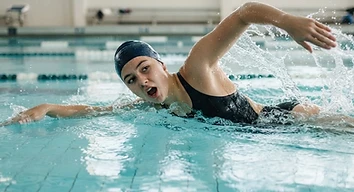
Endurance is not built by swimming until you cannot. It is built by swimming at a pace you can repeat, over and over, with enough rest to keep the technique intact.
Pace before distance
A swimmer who learns what a sustainable pace feels like can hold it for a long time. A swimmer who only ever sprints has two speeds: fast and stopped. We teach pace early, because everything else depends on it.
How we build a set
- Start with short repeats and generous rest, so every one is swum well
- Keep the distance the same and reduce the rest slightly
- Keep the rest the same and add a repeat
- Only then increase the distance of each repeat
Changing one variable at a time is what makes progress steady instead of erratic.
Technique under fatigue
The point of endurance work is to swim well while tired. If a stroke collapses in the last third of a set, the set is too long or the pace is too fast. A swimmer practising a broken stroke is practising the wrong thing.
Dryland and the long view
Older swimmers benefit from general strength work, mobility and sleep, but a swimmer's fastest gains come from consistent, well-paced water time. Ten hours of good practice beats thirty hours of grinding.
Avoiding burnout
The clearest warning sign is a swimmer who stops wanting to go. Variety, realistic goals, rest weeks, and celebrating improvement rather than only results all keep a swimmer in the sport long enough to get good at it. The swimmers who go furthest are the ones who still enjoy it at fourteen.