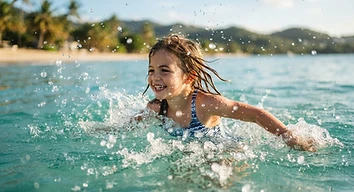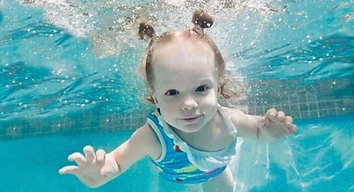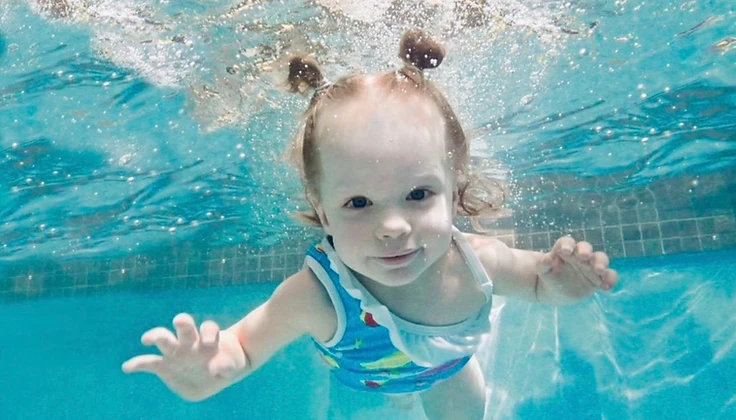
Most of a toddler's water learning happens in short, repeated moments rather than in long lessons. Bath time is the easiest place to build the skills that keep them safer in a pool.
What to practise in the bath
- Bubbles. Blowing bubbles on cue teaches breath control and makes water on the face far less startling.
- Pour and drip. Let water run gently over the head and face so it stops being a surprise.
- Back floating. Support the head and practise lying back. This is the hardest position for many toddlers and the most valuable one.
- Wall reaching. Have them reach for the side of the bath, then hold on. That is the beginning of self-rescue.
- Getting out safely. Practise turning and climbing out rather than launching over the edge.
Keep it short and playful
Two or three minutes of practice inside a normal bath is plenty. If it becomes a drill, a toddler will resist it. Play, praise, and stop while it is still fun.
Always within arm's reach
Bath safety is pool safety in miniature: an adult within arm's reach, never a toddler alone, not even for a moment. Bath seats and rings are not supervision.
What carries over
Familiar cues carry straight into lessons. A toddler who has already heard blow bubbles and reach for the wall at home arrives at the pool recognising the language, and that familiarity is worth weeks of progress.