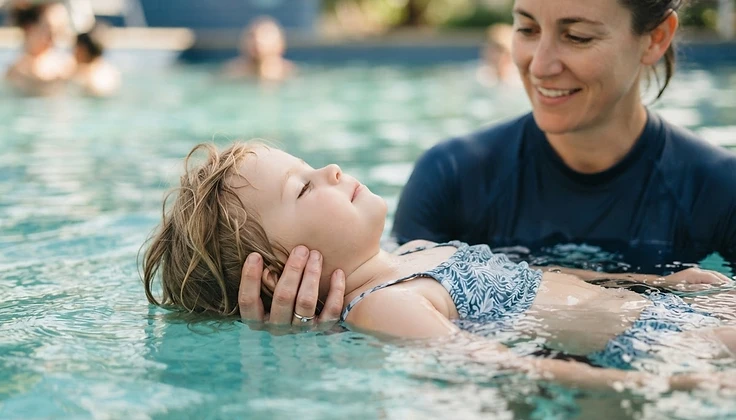
Every child learns differently. Some need more repetition, some need a different entry point, and some need the water itself to feel more predictable before any skill can start. Our job is to adapt the teaching, not to expect the child to adapt to it.
What adapting actually looks like
- Fewer words and more demonstration when language is not the fastest route in
- Visual cues and a consistent routine, so the lesson is predictable from the first minute
- Shorter, calmer steps — one new thing at a time, with the option to stop
- Extra processing time, and waiting rather than repeating a question louder
- Sensory care: noise, splashing, water temperature and goggles all matter more for some children
- Firm support and deep pressure where a light touch is overwhelming
Progress is not measured the same way for every child
For one swimmer, a win is putting their face in the water. For another, it is completing a lesson without leaving the pool. Both are real progress, and both count. We track skills individually so families can see movement even in weeks that feel slow.
One-on-one matters here
Private lessons mean nothing has to be averaged out. There is no group to keep pace with and no audience. The instructor can follow the child in front of them.
Tell us about your swimmer
What helps them feel safe, what overwhelms them, what they enjoy, and how they communicate. The more we know before the first lesson, the better that first lesson goes. Our adaptive and individualized program is built around exactly this.

