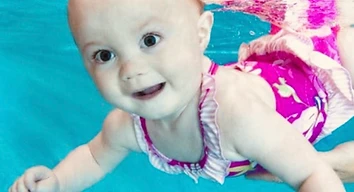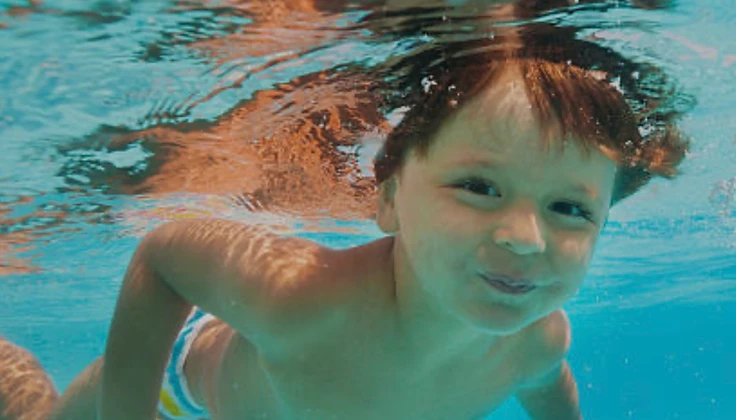
Parents often ask what their child will learn in the first month. The honest answer is that swimming is not one skill — it is a sequence, and the order matters more than the speed.
The ladder
- Comfort. Being in the water without distress, entering and exiting safely, and trusting the instructor.
- Breath. Blowing bubbles, controlling the breath, and learning the cue that means breathe now.
- Float. Front and back floating, and recovering from a float to a standing or supported position.
- Roll over. Turning from face-down to face-up to find air, then orienting back toward the wall.
- Move. Traveling forward independently for short distances, then further, with controlled breathing.
- Stroke. Body position, kick and arm action coming together into real freestyle and backstroke.
Why we do not skip ahead
A child pushed into stroke work before they can float and breathe will often stall — sometimes for months. The foundation is not a delay. It is the thing that makes everything after it possible.
What progress actually looks like
Progress is not a straight line. Some weeks a swimmer consolidates rather than advances, and that is normal. We track each skill from Not Introduced through Mastered so parents can see real movement instead of waiting for a vague milestone.
What you can do at home
Practise the same cues in the bath. Blowing bubbles, pouring water gently over the face, and repeating the holds you see in lessons all carry over. Short and often beats long and rare — in the bath as much as in the pool.